Reading
At Joseph Hood Primary School, we believe that reading is at the heart of learning. Children have the opportunity to explore high-quality fiction, non-fiction and poetry texts, through daily guided reading sessions. We want every child to see themselves as a reader, to enjoy books, and to recognise the power that reading has to open up new worlds, ideas and opportunities.
Our Vision
Reading is not just a skill – it is a gateway to success in all areas of the curriculum and in life. We are committed to ensuring that every child leaves Joseph Hood Primary School as a confident, fluent reader who reads for both purpose and pleasure. We value the role that stories, poems and non-fiction texts play in shaping children’s understanding of themselves, others and the wider world.
We are also committed to exposing children to a wide range of voices and perspectives. Our reading curriculum includes books written by authors of different cultures, ethnicities, backgrounds and genders. We believe this is vital in helping children to see themselves represented in what they read, as well as opening their eyes to experiences and viewpoints that may be different from their own.
We work in partnership with families to foster a culture of reading at home as well as at school, believing that children who read regularly are more articulate, more confident and better equipped to thrive academically, socially and emotionally.
How we INSPIRE in Reading
Inclusive 
Reading at Joseph Hood is designed so that every child can access and enjoy books. We provide carefully chosen texts and tailored support so that all pupils – regardless of ability, background or experience – can develop as confident, fluent readers.
Nurturing 
Our Reading curriculum nurtures curiosity, imagination and self-belief. Children are encouraged to explore new genres, grow in resilience when faced with challenge, and take pride in their progress as readers.
Success 
We celebrate pupils’ successes, big and small – from mastering phonics to finishing a challenging novel. Step by step, children gain the skills, stamina and confidence to read a wide range of texts for pleasure and purpose.
Perseverance 
Reading requires focus and determination. Whether decoding tricky words, tackling demanding texts or exploring new vocabulary, children learn that effort and persistence are key to becoming lifelong readers.
Imagination 
Books spark imagination and creativity. Through stories, poems and non-fiction, pupils are encouraged to think deeply, make connections and discover new worlds beyond the classroom.
Respect 
Reading fosters respect – for different voices, cultures and perspectives. Our curriculum exposes pupils to diverse texts that help them understand and value experiences beyond their own.
Encourage 
We encourage pupils to develop a love of reading that extends beyond school. Children are inspired to read at home, share books with their families and friends, and see themselves as lifelong readers who learn, imagine and grow through books.
Our Intent
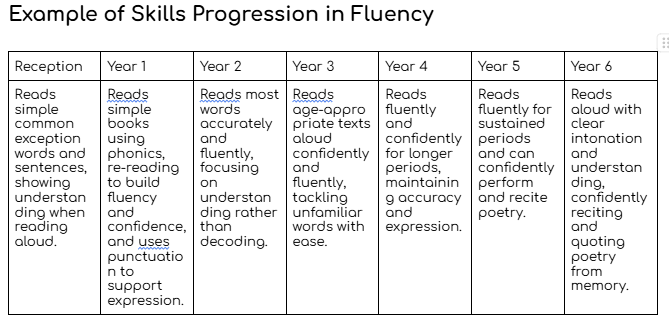
We intend for every child at Joseph Hood Primary School to develop fluency, accuracy and confidence in reading, while understanding and enjoying a wide range of texts including fiction, non-fiction and poetry. Our aim is for children to build strong comprehension skills that help them read beyond the words on the page, making inferences and exploring deeper meanings. Through exposure to rich and varied language, they will develop a broad vocabulary to use confidently in both speech and writing. Above all, we want our pupils to see reading as a source of enjoyment, imagination, knowledge and discovery, and to be fully prepared for the next stage of their education with the reading skills they need to succeed.
Our Implementation
Early Reading and Phonics: In EYFS and KS1, we teach early reading through the Read Write Inc phonics programme, in discrete daily lessons. This ensures a systematic approach to phonics and early reading so that children quickly gain the skills needed to decode and blend words with confidence.
Reading Lessons: Across the school, children are taught through a combination of guided reading, whole-class reading and comprehension lessons. In Key Stage 1, children take part in carousel reading activities throughout the week, working in focused groups with the teacher and engaging in a range of activities linked to a focus text. In Key Stage 2, children participate in whole-class reading lessons, exploring a variety of texts and developing their comprehension skills through thoughtful questioning and practical, engaging activities. Across all year groups, we use high-quality, carefully chosen texts that inspire discussion, reflect a diverse range of authors and characters, and provide strong models for language and ideas.
To support comprehension, reading skills are taught explicitly through the National Curriculum content domains. These give children the tools to understand, discuss and analyse texts in a structured way.
In Key Stage 1, children develop skills to:
-
1a: Draw on knowledge of vocabulary to understand texts.
-
1b: Identify and explain key aspects of fiction and non-fiction texts, such as characters, events, titles and information.
-
1c: Identify and explain the sequence of events in texts.
-
1d: Make inferences from the text.
-
1e: Predict what might happen on the basis of what has been read so far.
In Key Stage 2, children are taught to:
-
2a: Give and explain the meaning of words in context.
-
2b: Retrieve and record information; identify key details from fiction and non-fiction.
-
2c: Summarise main ideas from more than one paragraph.
-
2d: Make inferences from the text; explain and justify inferences with evidence.
-
2e: Predict what might happen from details stated and implied.
-
2f: Identify and explain how information or narrative content is related and contributes to meaning as a whole.
-
2g: Identify and explain how meaning is enhanced through choice of words and phrases.
-
2h: Make comparisons within the text.
Reading for Pleasure: Each class enjoys daily story time, where teachers read aloud to children. We also encourage children to explore the school library, borrow books to take home, and share recommendations with peers.
Cross-Curricular Reading: Reading is embedded across the curriculum, with opportunities for children to encounter and explore a wide variety of text types linked to other subjects.
Home Reading: Children are encouraged to read at home every day, with parents and carers playing a vital role in developing fluency, understanding and a love of reading. Reading is not just about decoding words; it involves exploring meaning, discussing ideas and understanding what is implied in a text. Even confident readers benefit from being read to and talking about books with adults. All children have a Reading Record to strengthen the home–school partnership. Parents and carers are encouraged to record their child’s reading regularly, adding short comments about what has been read or discussed. Where they are able to do so, children are also encouraged to write their own reflections. Teachers and teaching assistants will read and comment in the Reading Record too, supporting ongoing dialogue between home and school and helping to build a fuller picture of each child’s reading progress and interests.
Support and Challenge: We provide targeted support and interventions for children who need additional help with reading. For confident readers, we provide opportunities to deepen their understanding through higher-level texts and discussion.
Our Impact
The impact of our reading curriculum is that children at Joseph Hood Primary School make good or better progress in reading from their individual starting points and leave Year 6 as fluent, confident readers who can meet the demands of the secondary curriculum. They develop a lifelong love of reading, seeing books as a source of both pleasure and knowledge. Our pupils are able to talk about books with confidence, express their opinions and make thoughtful connections between texts and the wider world. They leave us with the vocabulary, comprehension skills and reading stamina needed to thrive in education and beyond.
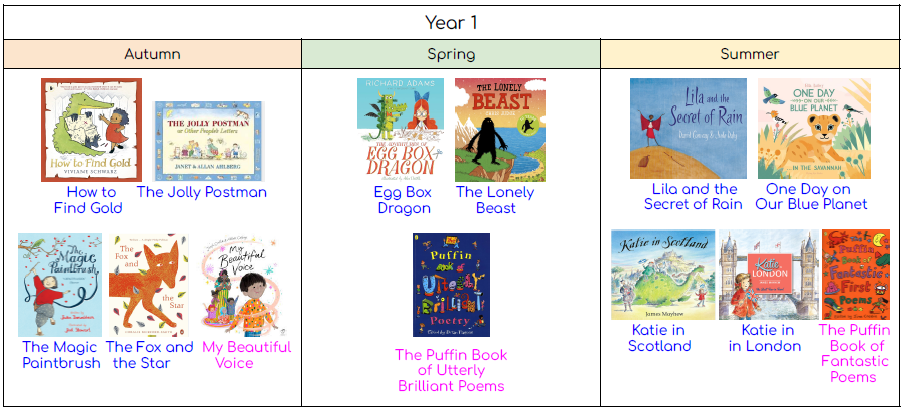
Year 1 Texts
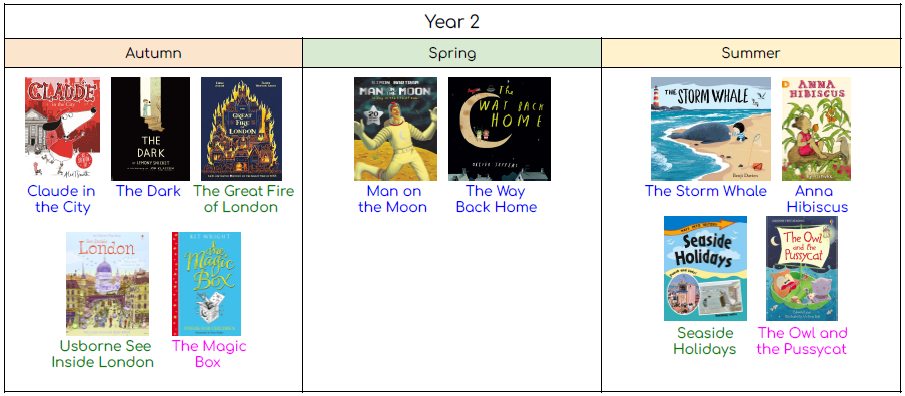
Year 2 Texts
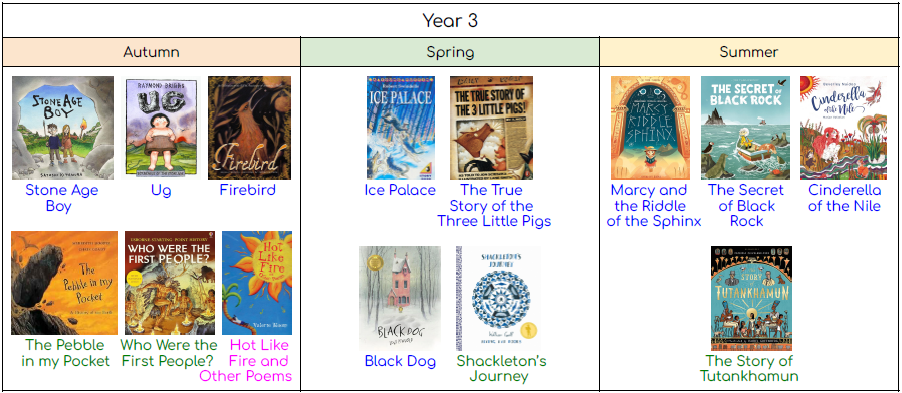
Year 3 Texts
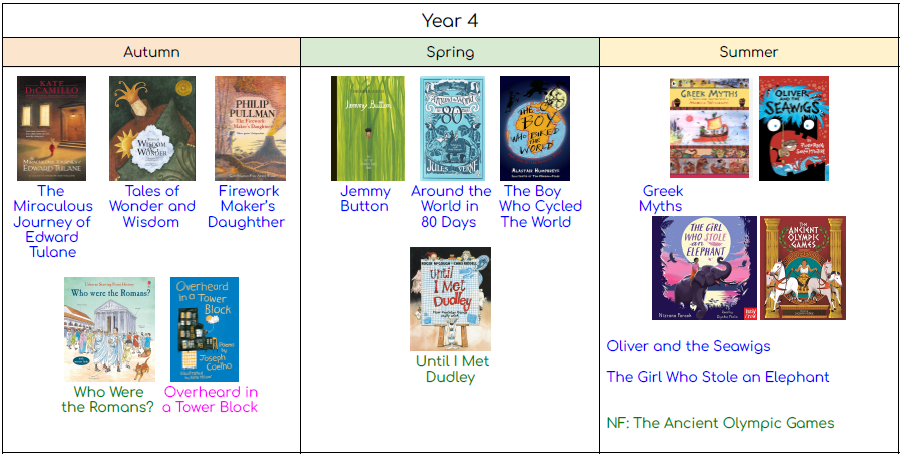
Year 4 Texts
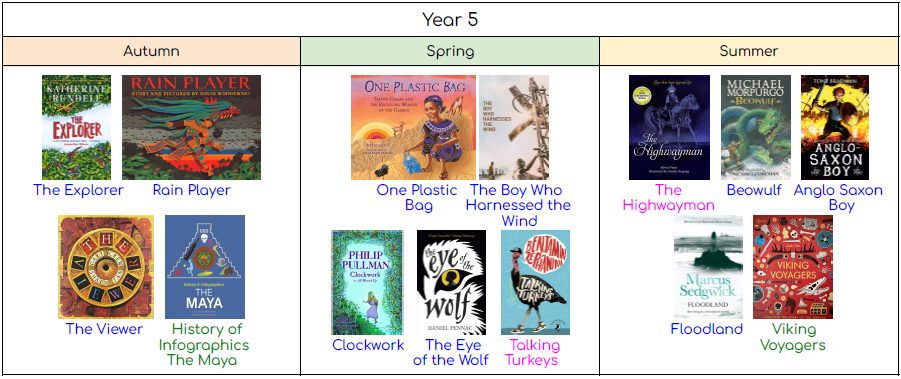
Year 5 Texts
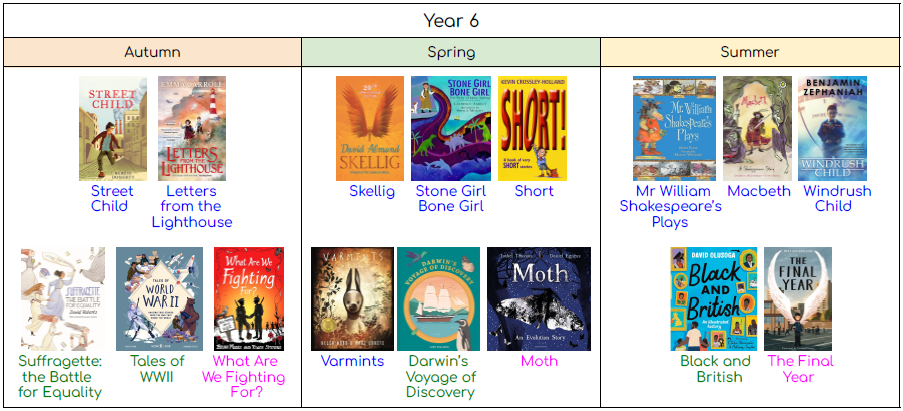
Year 6 Texts